
Blog
The Danger of 'Differently Abled'
5 mins
Reading Time

“Differently abled”. Two words that are sure to make much of the disabled community actively upset. And, no, not all of us - I am aware that some find this empowering (which is completely okay!). However, especially for those of us deeply grounded in the disability rights movement, these two little words can incite enough rage to write an entire article (literally).
Sure, people may say it with the best intentions - to uplift and inspire hope. Perhaps they don’t understand the layers upon layers of discrimination and otherness embedded within it. Perhaps they are unaware that this language places responsibility on disabled people to fit into society, rather than recognising the inherent challenges they face.
But when it comes to the activism backed by a history of injustice as long as ours, ‘best intentions’ are not enough.
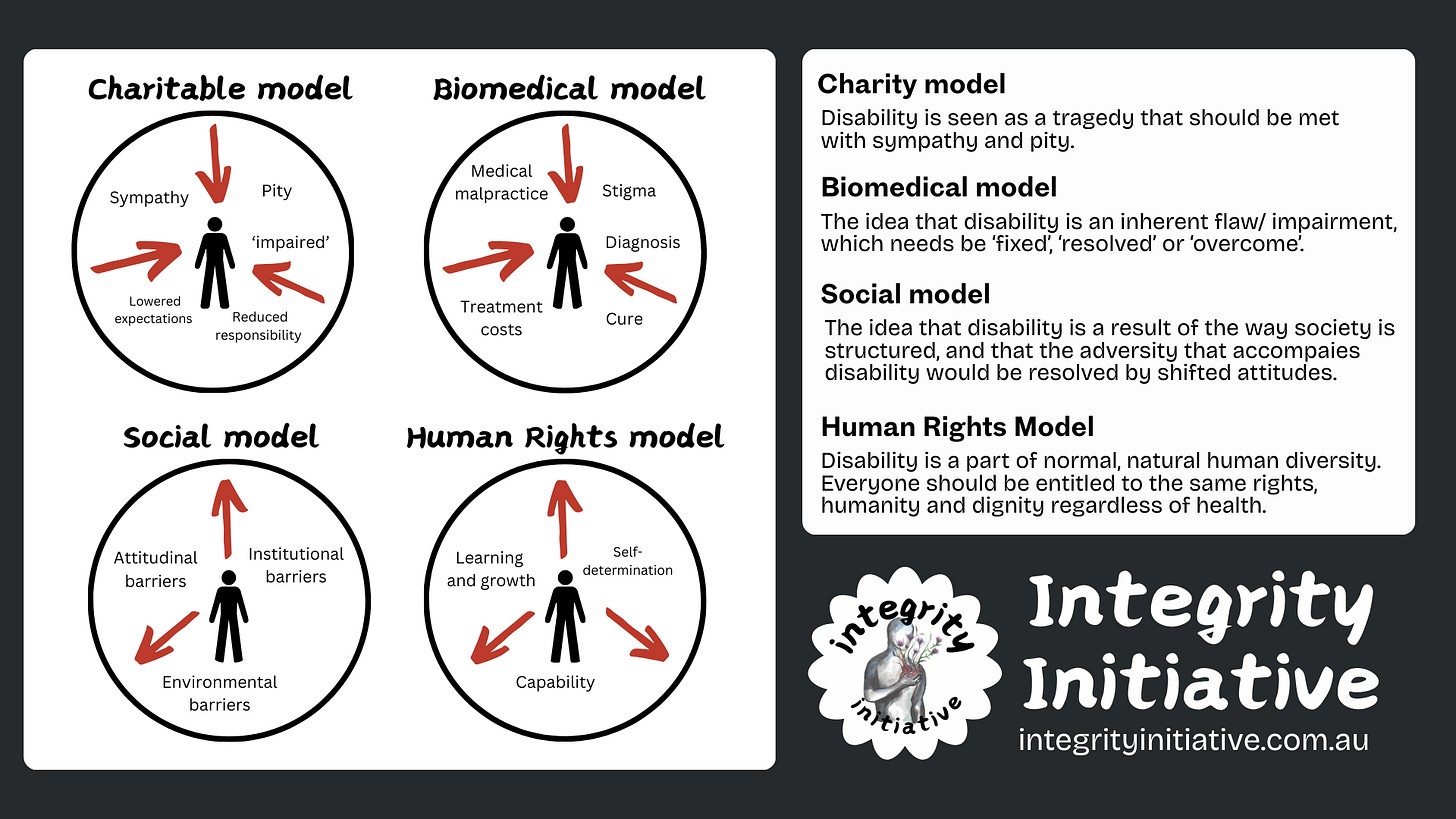
When we talk about disability, we often do so awkwardly, still in line with the damaging belief popularised by the biomedical and charitable models that disability is some sort of tragedy. I have quite literally seen non-disabled folk squirm when I tell them that I’d rather be called ‘disabled’ than ‘differently abled’ - a reminder that we live in a world in which disability is seen as something inherently negative. It is indicative that despite the advocacy and push away from charitable and biomedical models of disability, there is still a long way to go to reach a social perspective, let alone a (preferable) human rights approach.
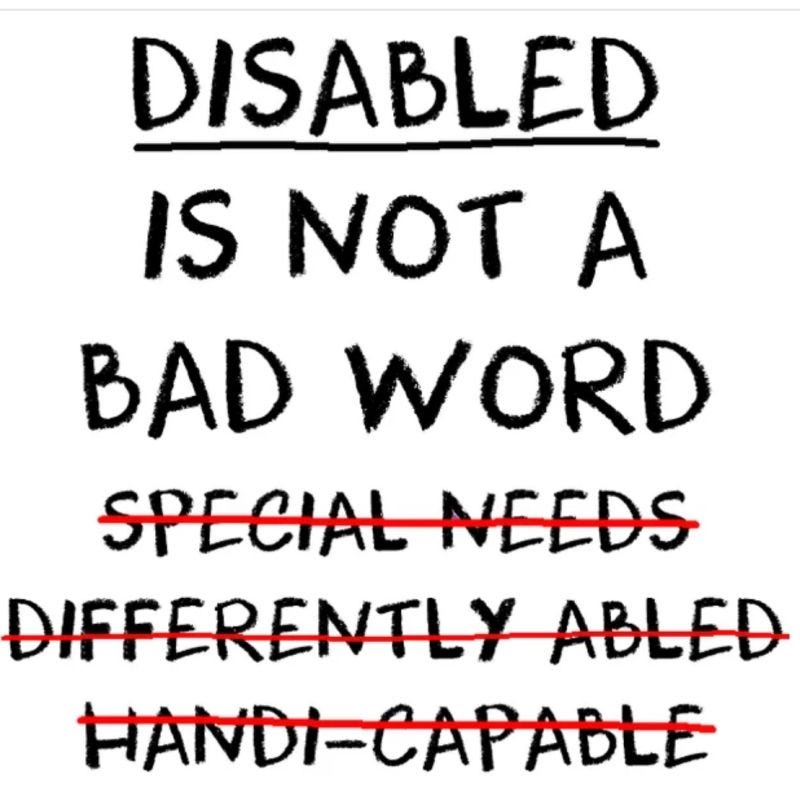
The truth is that ‘Disabled’ is not a bad word… or, at least it shouldn’t be.
Unfortunately, we still exist in a world where people don’t like to talk about the things that they don’t understand, and in which disability certainly is not understood.
Non-disabled folks often use language that they feel ‘softens the blow’ in an attempt to be more empowering. They frame it as respect, but often it reflects the perspective of someone raised to believe that being physically fit, active, and non-disabled makes a person more “desirable” or “valuable”.
So I ask, is it really empowerment? Or is it making themselves more comfortable in the presence of someone who does experience challenges that they know nothing about, which do fundamentally put them at a disadvantage?
Is it actually supportive? Or is it more indicative of sympathy, which in essence is anything but?
When you tell a disabled person that they’re differently abled, what you are saying to them is this: “Don’t worry, I think you’re normal” or “…despite the fact that you’re not normal I still think that it’s not that bad”.
This - in turn - communicates that
There is such a thing as ‘normal’
Deviation from this normality is a bad thing, which creates shame and fear.
A person’s ability to fit within normative ideals and to output productivity in line with societal expectations directly correlates with worth, wellbeing and success.
Struggling with the idea of ‘normal’ is something that many non-disabled folk also experience to a certain extent. However, most people who do not live with disability fit said realm of normality at least to some degree. Many will work a 9-5, enjoy (or work towards an illusion of) a picket-fence life and spend their savings on an annual holiday. Maybe they spend their weekends at pilates or walking the dog, occasionally enjoy brunch at their favourite cafe and don’t think twice about it. Many will find peace in the normative patterns and milestones without too much contemplation.
That is not said to shame or blame, but to invite awareness that it is an inherent privilege to experience the parts of life that we often miss. It is not until you navigate life through the lens of disability, adversity or oppression that these things we so often take for granted become luxuries and these ideals become inaccessible.
This leads us to the next harmful message packed into “differently abled”...
That it is not the responsibility of society to accommodate people with disability; and
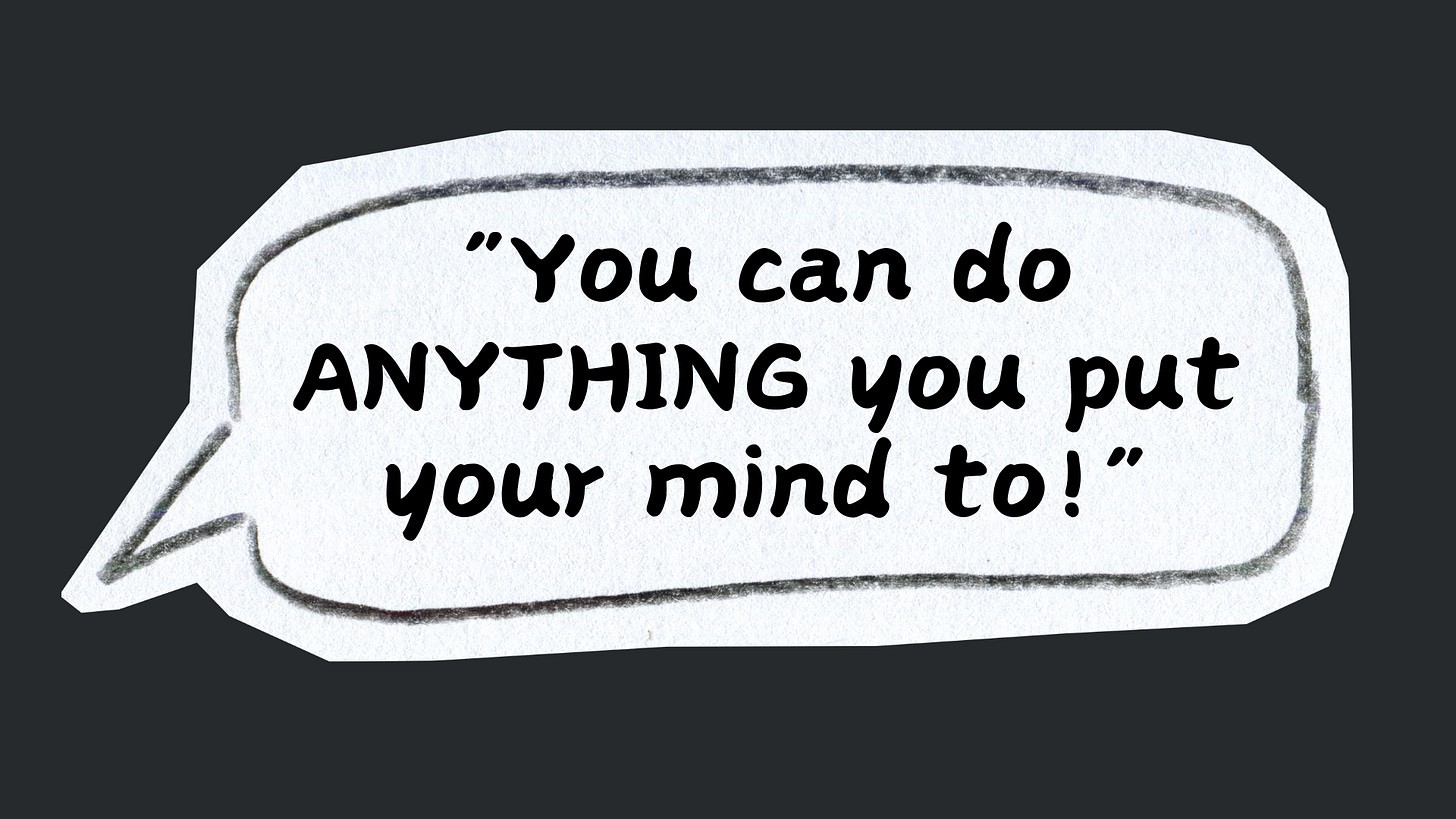
That disabled people don’t face inherent challenges so long as they have a positive attitude.
Terms like “differently abled” take “the disabled person’s daily struggles, that are caused by ableist society, and attempts to turn these experiences into something positive and uplifting.”
Elisabeth Wright, disability activist and paralympic medalist. https://medium.com/swlh/whatever-you-do-dont-call-me-differently-abled-d947ac029801
Two things can be true - firstly being disabled is not a ‘superpower’, as it fundamentally brings additional challenges and barriers. Secondly, this is not a bad thing, and it does not limit a person’s ability to achieve, excel, succeed… it just makes it more challenging.
In this dichotomy is both the strength and the downfall of the social model of disability. The strength of the model being its identification of society’s structure as fundamentally in favour of non-disabled people, and that a shift towards accessibility would indeed remove several of the barriers that we face. The downfall of the model is that it fails to recognise that no matter how much accessibility is built into the world, there still are challenges we face that non-disabled folks do not.
The real kicker, though, is that often in trying to express the desire to be referred to as ‘disabled’, disabled folk are lectured about their own language: “...you shouldn’t say disabled, you should say person with disability” is a classic.
It’s important to recognise that everyone has different preferences - some folks prefer person-first language, whilst others would rather be called disabled and take pride in this identity. The problem is not in the language itself, but rather the message it conveys when we deny someone the choice. Herein lies the sixth common message that disabled folks encounter when you call them ‘differently abled’:
We know better than you. You are not the expert in your own needs, rights, and lifestyle. We are.
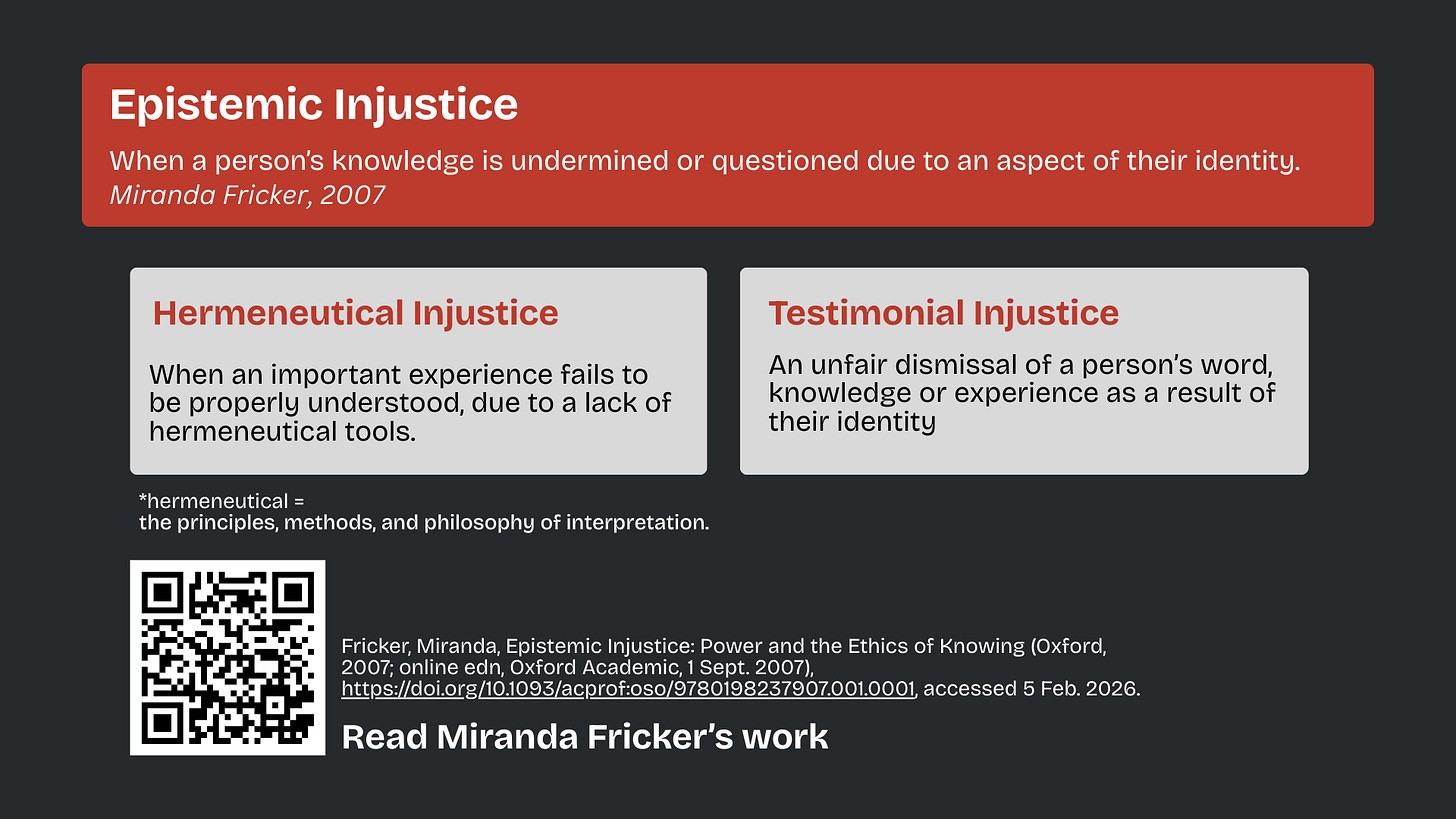
I.e. something that continues to challenge and oppress all marginalised communities in just about every space they exist: epistemic injustice
Epistemic injustice (n)
A form of systemic discrimination relating to the creation of knowledge. It occurs when people from marginalized groups are denied capacity as “epistemic agents” (i.e., as creators of knowledge), and are diminished or excluded from the process of creating meaning [4].
(Okoroji et al., 2023)
In simple terms, this essentially refers to when a person’s knowledge, perspective and/ or credibility is undermined as a result of their identity and background. It can be conceptualised as hermeneutical injustice (characterised by a lack of access to or stigma preventing access to frameworks and shared language), or testimonial injustice (in which a person’s word or testimony is questioned due to a marginalised identity).
These concepts have been coined by the British philosopher Miranda Fricker, a spearhead in moral philosophy and epistemology.
It might seem far-fetched that calling us ‘differently abled’ can be twisted into something this outwardly disempowering, but the history of oppression, violence and discrimination geared towards those with disability means that this reality very much does come into consideration.
For decades, disabled folk have been denied autonomy. We have had our voices silenced and have been deemed to lack capacity. We have been pillaged of choice and self-determination, such that we now exist in a state of hyper-awareness. A state in which we are so conditioned to allow others to tell us how to think and feel.
For many of us, the only place free from this messaging is within disability spaces where we are not only allowed but moreover encouraged to embrace our identity, adversity and to unite regardless.
Personally, I have found calling myself disabled to be liberating. It’s been permission to embrace my identity, make peace with how my brain operates and to celebrate that this is simultaneously not my identity, whilst also a key part of it… until some non-disabled folk tell me I’m not disabled, that I simply am ‘differently abled’.
Join the Ingetrity Army
Be apart of our growing team

