
Blog
Integral Language: When Words Get Messy
4 mins
Reading Time
“People are too sensitive these days”.
“It seems everyone wants to be offended by something”
If you’ve heard the above statements (and it’s pretty hard to not have), you’re probably well aware that language and its nuance are a point of great tension.
Perhaps it’s true that folks are more vocal about being ‘offended’… but perhaps people always have been. Perhaps now they are just more equipped to express why. Perhaps now they finally have platforms to ask for accountability.
Sometimes, the fear of ‘saying the wrong thing’ itself is enough to scare people away from uncomfortable but essential topics.
It’s a challenge that rears its head at family gatherings, in schools, workplaces and beyond, but perhaps most of all it leaves its mark when receiving care for mental health challenges under a biomedical model of health.
Those who come from clinical perspectives may not see issue in referring to their patients as ‘complex’ or ‘non-compliant’, it is likely a part of their practice that they dedicate no further thought to. On the other hand, Lived Experience advocates are beginning to become increasingly vocal about the dehumanising and demeaning side of being seen as a patient as opposed to a person.
There are arguments to be made on either side. Some clinicians genuinely believe that there is nothing inherently offensive about the terms they cling to and that it is simply “the way it is”, whilst more progressive perspectives take a more affirming stance that heroes human rights, dignity and empowerment.
The truth is that healthcare is founded on the oppression of those living with different identities that are framed as deficits. Many of the terms that we use nonchalantly are micro-aggressions that build up over time, like consecutive mosquito bites, to form intolerable discomfort.
Alas, these reflections relate to us all.
Humans are resistant to change, and it is coming at a cost as professionals, communities, and well-meaning loved ones continue to silence the voices of advocates calling for more humane terms.
It’s typically not being called a slur or labelled burdensome, yet subtle exclusion and ostracism exists in ways we may not consider, including…
“Differently Abled” or “diverse abilities”.
The term “differently abled,” though often used with good intentions, is deeply unsettling for many within the disability rights movement because it reinforces harmful assumptions about normality, worth, and responsibility. While some find the term empowering, it frequently reflects discomfort with disability itself, rooted in biomedical and charitable models that frame disability as tragedy.
Rather than challenging ableism, “differently abled” can place the burden on disabled people to assimilate, implying that disability is only acceptable if it can be softened, reframed, or made palatable to non-disabled society. This language upholds the idea that deviation from “normal” is undesirable and that productivity and conformity determine a person’s value, while ignoring the structural barriers and inherent challenges disabled people face.
Perhaps the most dangerous message we relay when we use the term “differently abled” is the denial of disabled folks’ choice, freedom and ability to reclaim that language and choose their own labels. When we override disabled people’s choices, we reinforce epistemic injustice by denying them authority over their identities and experiences.
While the social model of disability rightly highlights societal barriers, it can also obscure the real, ongoing challenges that remain even in accessible environments. For many, reclaiming the word “disabled” is an act of liberation and self-acceptance… an act of liberation that is repeatedly disrupted when non-disabled people insist on reframing that identity for their own comfort.
To explore this topic in more depth, including the historical, political, and lived-experience context behind this language, read the full article ‘The Danger of Differently Abled” here: https://integrityinitiative.substack.com/p/the-danger-of-differently-abled
“You don’t seem autistic” (especially as a person assigned female at birth).
The way that neurodivergence is currently perceived is heavily based upon stereotypes, and these stereotypes are reflective of only a minority.
All forms of neurodivergence - in particular Autism and ADHD - present in an impossibly and endlessly complex number of ways. What we see depicted is merely a single manifestation, and one that is certainly not the most common, especially amongst those assigned female at birth (AFAB).
“The conceptualisation of autism as a clinical neurodevelopmental diagnosis comes historically from descriptions of predominantly AMAB children” [1]
We also know that neurodivergent people who are assigned female at birth typically develop a greater ability to ‘mask’ (or suppress/ hide their differences, for instance ‘scripting’ conversations, copying peer behaviours, and hiding traits that are deemed as ‘unusual’) [1,2].
The significant under-identification amongst those AFAB is layered and enigmatic. It relates to gender norms, developmental patterns, social intelligence, stereotypes and beyond. What is not ambiguous is the fact that far more females are left either undiagnosed or do not receive a diagnosis until later in their life.
“As a person who identifies as both female and neurodivergent, I can personally attest to having my experiences invalidated. I always have been hyper-aware of the ways in which my thinking and behaviour deviates from ‘normality’, and as such I have become incredibly good at hiding this. I have conditioned myself to mask as to fit others’ expectations of me. I have taught myself the language of neurotypicality, and in the process of doing so I have become so fluent that only other neurodivergent people can tell that I’m autistic.”
Rachael Burns, intersectional lived experience advocate
The process of coming to terms with and accepting one’s neurodivergence is typically a complex one, especially for those who have grown up in denial of this part of themselves. As you can imagine, to get to a stage of acceptance only to be questioned by others or accused of ‘attention-seeking’ is soul-crushing.
“Identifying as neurodivergent answers an existential question. A question that was previously answered with the explanation that I was broken down. A denied truth, a judgement and a sense of shame. Years of self-loathing over what I’d assumed was my personal failure.”
“Traumatic”.
In daily living, it is not uncommon for a person to talk about something minorly inconvenient that happened to them as ‘traumatic’.
For those of us who live with complex trauma, this is a message of invalidation.
Trauma is not something that is simply unpleasant or that ruins one day. Trauma can ruin lives. Trauma can kill. Trauma can change a person’s entire perception of themself and the way they fit into an ever-complex world. It is heavy, cold, sickening, dehumanising, ruthless and vicious. It is not character building, nor something to be joked about.
“Crazy/ insane”.
It can feel like a natural response, calling something that is extreme (either negative or positive) ‘crazy’ or ‘insane’.
Unfortunately, these words have very negative connotations for people who have endured mental ill-health and the unrelenting societal stigma accompanied by it. Historically, people with mental ill-health have been locked in ‘insane asylums’ and labelled as lunatics. They’ve been drowned in degradation which has doubled as an excuse to deny their human rights. They’ve also been literally drowned and labelled as witches, but this is another spiel that is better saved for another day
‘Crazy’ has kept people with mental ill-health subordinate. It has reinforced power structures that seek to discredit and dehumanise mental health challenges, and has ‘othered’ us through systemic oppression and segregation.
In all likelihood, what you are referring to is ‘incredible’ or ‘awful’, ‘shocking’ or ‘unexpected’, but not ‘crazy’.
“Obsessive/ obsession/ obsessed/ addicted”.
Yes, you like açai. No, you are not obsessed with it, nor are you addicted to it.
Obsession and addictions are all-encompassing. Obsessive thoughts and ruminations are powerful, disruptive and persistent, often becoming inherently disabling. Addictions are psychological or physical dependencies, without which a person is unable to function in their daily life - again something that is not quirky or amusing but rather can be controlling and debilitating.
Addictions are not always in the form of alcohol or drug dependency, and obsessions are not always about cleaning. They are complex and can have significant consequences for those experiencing them (and those around them) physically, mentally, socially and emotionally. They are not fickle and should not be treated as though they are. People experiencing addiction are not a ‘lost cause’ - they are simply utilising a coping strategy in a way that is also causing them harm and should be met with compassion and support.
Intrusive thoughts.
Something else we hear on the daily - thanks to the moral dilemma that is TikTok.
Intrusive thoughts:
unwanted, involuntary, and often disturbing mental images, urges, or ideas that pop into the mind unexpectedly
Intrusive thoughts are not mild irritation or things you want to say to express your disdain. They can be frightening, graphic, violent, confronting and more.
‘Inspirational’ in the context of disability.
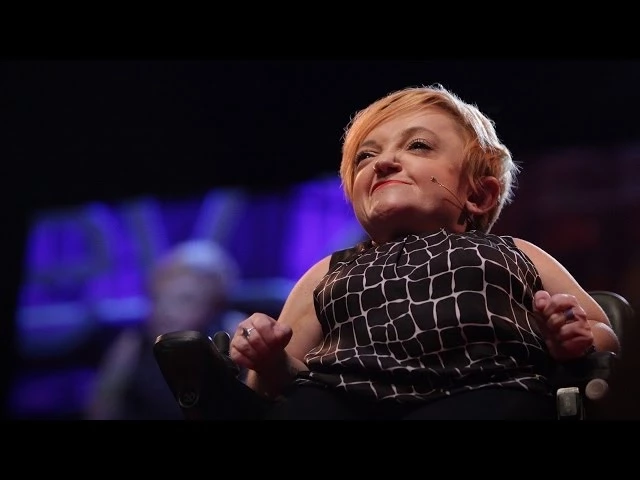
Inspiration porn, as described by Stella Young:
Praising a disabled person as being ‘inspirational’ just for doing everyday, regular things.
The TED talk ‘I am not your inspiration thank you very much’ by Stella Young has become an incredibly popular reference within the disabled community.
Inspiration porn objectifies the person with disability, reducing them to some object for non-disabled people to feel good about themselves and playing into the power imbalance.
It sets a precedent that disabled people are incapable of achieving things that non-disabled people do every day. It positions them as dependent and vulnerable, suggesting they shouldn’t be expected to fulfil their dreams and lead meaningful lives. It also plays into the narrative that when we are successful, we are ‘role models’. There is no space to succeed and struggle, or simply to be ‘ordinary’.
“I don’t want to be called ‘inspirational’ for achieving things that are expected and go unnoticed when non-disabled people achieve them!”
Emily Sullivan, intersectional advocate and youth ambassador
The majority of disabled people aren’t winning medals, we aren’t mathematical geniuses, most of us are doing what we can - including great things - on a smaller scale. Some of us might not be achieving society’s standardised ‘goals’ or ‘milestones’- but these look different for us, and our achievements should be held outside of ableist standards.
“You’re so strong”.
Adversity can be disempowering. It can be exhausting, draining, uncomfortable, painful and at times can leave a person feeling hopeless and weak.
Society (to an extent) makes exceptions for ‘bad days’ - something we all have, typically a time to be gentle on ourselves. However, as soon as this ‘bad day’ becomes the normality those experiencing it are told they are strong and no longer are afforded the same softness.
A person’s ability to endure pain and to mask this pain does not make it easier to hold. Furthermore, pain that is held well does not necessarily hurt any less.
After years of being eroded and worn down, it is not only normal but also completely sensical that someone would feel weaker, not stronger. That doesn’t mean they are ‘weak’, but it does mean that they are likely much in need of reprieve. Telling them they are ‘strong’ denies this truth and fails to recognise that, in fact, they probably don’t feel strong.
“Your trauma made you stronger/ better”.
Those who have been through life-altering trauma are unique - one truth cannot apply universally. Some may see trauma as formative, others may see it as the reason they were unable to live the life they desperately wished they could.
Whilst some may not take issue with this being told that their trauma made them a stronger or better person and may actually agree it had, there is a significant proportion of trauma survivors who find it hurtful.
Assuming that adversity is empowering takes away from the hardship that has been endured, and to many may feel like a justification of something that they should never have had to endure.
Using ANY mental health condition as an adjective (eg, “I’m so OCD/ the weather is bipolar/ you look anorexic”).
Mental health challenges are not adjectives. They are not accessories, rather are complex and often excruciating. To minimise and reduce these experiences to a single symptom (and one that is highly saturated by stigma and misconception at that) is to deny this fact.
Sure, we have made some progress - that fact is undeniable. However, the truth is that a lot of this progress is rooted deeply in generalisations and misconceptions, or based on clinical definitions and diagnostic criteria that are only such a small part of the reality. Sometimes people don’t need to learn lessons the ‘hard way’, but through care, kindness and softness.
‘Delusional’ (or worse… ‘delulu’).
The implications of equating someone’s actions to those of someone labelled ‘delusional’ are incredibly damaging. Delusions are often very frightening and detrimental to the person experiencing it. Representing someone’s less-than-ideal behaviour (such as double texting their ex) as being ‘delulu’ minimises the severity of this symptom of psychotic illness.
“I experience manic episodes which are grounded in persecutory delusions, and have left me feeling alone, hopeless and terrified. It really feels like a slap in the face when someone minimises my experience, to fit their narrative of how they perceive ‘delusional’ behaviour, which is so far from my reality.”
Emily Sullivan
The historical implications of terms such as ‘psychotic’ and ‘delusional’ also have a deep history of being used to weaponise the credibility and power of those with mental ill-health. These words have been used forcibly against mental health patients specifically to provide involuntary treatment and treatment decisions, providing a ‘label’ to justify violating their consent.
The inaccurate represention of ‘delusional’ behaviour gives even more power to public fear, media portrayal, and stereotypes around people who experience psychosis. It further ‘others’ them, leading to isolation, exclusion, and systemic discrimination in employment, education and other services.
‘Manic’ and ‘psychotic’.
The word ‘psychotic’ is so often used within the context of violence, abuse, and dishonesty. This further stigmatises and dehumanises those with mental ill-health and perpetuates stereotypes yet further. Mental ill-health is positioned as ‘dangerous’ to a point that many would be surprised to discover that those with psychotic illness are far more likely to be found as victims than perpetrators of violent crime [3].
‘Gaslighting’.
For the past few years, it has been almost trendy to talk about gaslighting as something that happens in everyday life, to the point where most people actually don’t understand the true meaning of the word.
To gaslight is to refute an established fact. To undermine and ridicule someone for standing up for what they know to be true and deny that it ever happened. To make a person feel foolish and to push them to question their own grasp of reality. To berate them so much that they feel there is something wrong with them and distrust their own interpretation of the world itself.
‘Unsafe’, ‘unsafe sharing’ and ‘trauma dumping’.
Dignity of Risk: the right of individuals, particularly those in care settings, to make their own choices—even if those choices involve risk to their health or safety. (Aged Care Quality and Safety Commission)
When we share, there is never any guarantee that it is completely ‘safe’. When we exist in the world, we can never be entirely protected or sure of what will come. That is part of life, and one that is beautifully, messily, chaotically celebrated when we afford people the ability to make mistakes and to learn from them, even when we don’t agree.
When we translate this to language and what is colloquially termed ‘trauma dumping’, it leave little space for people to ‘get it wrong’.
As someone who works in and with community, the truth is that people will and do ‘over-share’. Yes, it’s uncomfortable, and yes, it can be heart-breaking. But it’s also part of being human. It’s a privilege to hear a part of someone else’s story because it demonstrates comfort, trust and mutuality. That’s not to say it isn’t important to set, communicate and respect one’s own and others’ boundaries… but it is to say that even with planning, care, tact, and practice. It is messy and human.
To further complicate the matter, ‘trauma dumping’ has now fallen victim to the beast that is the internet… that is - it has become a buzzword which is now thrown around and used less in the context it is intended and more as a trend. As with other instances in which ‘therapy speak’ has been adapted into the vocabulary of the average Joe, this creates inherent danger and additional layers of exclusion, discrimination and fear around mental health.
‘Hyperfixation’, ‘special interest’.
Recent years have seen the emergence of a community that loudly, proudly celebrates neurodivergence, particularly autism and ADHD (which are not the only forms of neurodivergence, but are certainly the most recognised).
Everyone (well, most people) have interests, but not everyone has a special interest. These are deep, identity-defining parts of a person that influence how they see themselves, the world, and these unite.
In contrast, a hyper-fixation (typically characteristic of someone with ADHD) is an all-consuming, prolonged state of focus on a particular topic, task or activity. In a state of hyper-focus, it is not uncommon for a person to ignore (or more accurately to lose awareness of) external responsibilities and instead feel almost trapped in a cycle of chasing dopamine from said hyper-fixation.
In general, anything related to neurodivergence when used incorrectly perpetuates the misunderstandings and stereotypes, which yet again warrant a deeper conversation.
‘I’m starving’.
I have had many people talk about how they are ‘starving’ and ‘will start wasting away’ because their lunch is an hour late. As someone who has lived with a restrictive eating disorder, it always feels like a punch to the gut.
I get it. You’re hungry, that’s normal and expected. You’re probably really looking forward to the next time you get a chance to eat and maybe you’re even starting to feel a little unwell if it’s been a little while since your last meal.
But I promise you, you’re not starving.
‘Attention seeking’.
Human behaviours - as outlandish as they may appear to others - have a ‘why’. Despite what we may be taught to believe, things don’t happen on a whim but are instead the result of various complex and intertwining factors that we will likely never truly unpack.
When someone behaves in a manner that we view as ‘attention seeking’, it is reflective of a deep unmet need that they are hoping to soothe. Perhaps they have been denied validation in the past and this is something integral to their healing.
Whilst this list could continue forever, it is these phrases that feel most imminent in the context of the world as it exists today.
Across all of these points, one thing that remains consistent is a lack of education and awareness. Societal ‘understanding’ is very much still warped by a biomedical lens as opposed to that of Lived Experience. This is a reality that Integrity Initiative’s dedicated volunteers are passionately combating.
REFERENCES
[1] Lai M., et. al. Improving autism identification and support for individuals assigned female at birth: clinical suggestions and research priorities. The Lancet Child & Adolescent Health, Volume 7, Issue 12, 2023, Pages 897-908. ISSN 2352-4642, https://doi.org/10.1016/S2352-4642(23)00221-3
[2] Bölte, S., Neufeld, J., Marschik, P.B. et al. Sex and gender in neurodevelopmental conditions. Nat Rev Neurol 19, 136–159 (2023). https://doi.org/10.1038/s41582-023-00774-6
[3] Ghiasi N, Azhar Y, Singh J. Psychiatric Illness and Criminality. [Updated 2023 Mar 30]. In: StatPearls [Internet]. Treasure Island (FL): StatPearls Publishing; 2025 Jan-. Available from: https://www.ncbi.nlm.nih.gov/books/NBK537064/
[4] Okoroji, C., Mackay, T., Robotham, D., Beckford, D., & Pinfold, V. (2023). Epistemic injustice and mental health research: A pragmatic approach to working with lived experience expertise. Frontiers in psychiatry, 14, 1114725. https://doi.org/10.3389/fpsyt.2023.1114725
Young, S. (2014, November). I'm not your inspiration, thank you very much [Video]. TED. https://www.ted.com/talks/stella_young_i_m_not_your_inspiration_thank_you_very_much
Join the Ingetrity Army
Be apart of our growing team

