
Blog
I’m The Weird Kid (And I Always Have Been)
3 mins
Reading Time

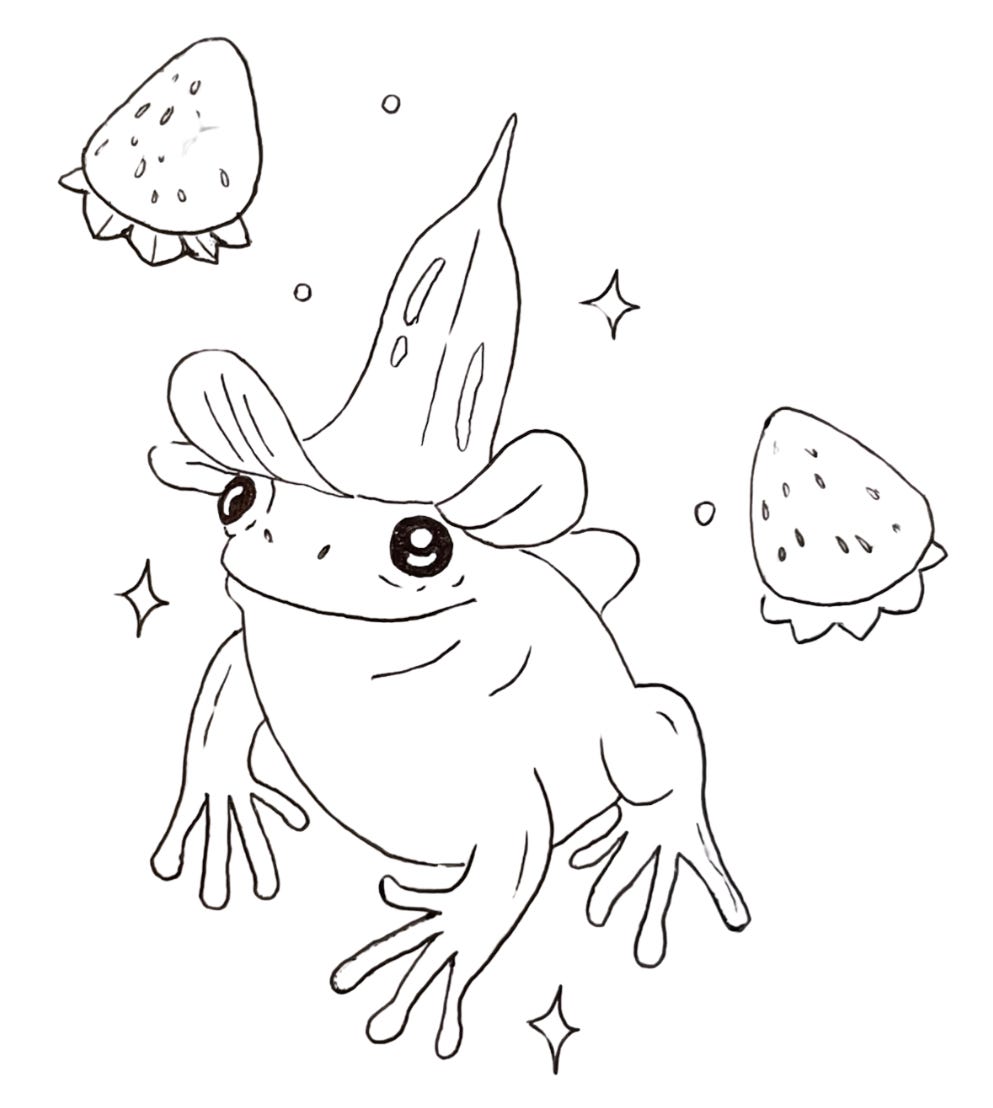
I love frogs.
Not because frogs are useful, symbolic, or connected to some larger meaning. They are not symbolic nor are they a significant part of my life story. In fact, I still am yet to own one as a pet (I will one day, mark my words).
I love frogs because loving frogs is pointless, weird, and silly.
Amid the darkness I’ve lived through, the coldness I’ve known, the pain I’ve carried, the anger I still hold, and the fear I know too well, frogs stand apart from all of it. And to be honest, most of my adolescence and much of my early adulthood, I didn’t have anything that stood apart.
At school I wasn’t so much the weird kid as the sad one, the one with nothing outside, the one whose entire being was academia.
I didn’t know I was sad at the time. In fact, it was useful.
You see, for so much of my life, everything had to be earned. Everything had to be justified, sensible, practical, reasonable. I didn’t get to be curious or work out what mattered to me, it didn’t matter. All that did was that I was ‘good’, ‘disciplined’ and ‘exemplary’. Predictability and academic performance were assumed of me, so I became predictably academic.
I didn’t care for frogs. So much so that anyone who knew me B.F. (that’s before frogs) has at some point asked me when and why that changed. When this happens, I hesitate because I have two answers.
The first is the one I usually tell, since it’s shorter and easier to digest: that it started as a joke I found funny around the time I turned nineteen, for no particular reason.
The second, truer answer is that it’s not actually about the frogs. It’s the silliness that I spent years learning to hide.
Which leads to a mammoth question looming over society as we know it. What happens to a person, a community, a piece of writing, when the effortful and specific and slightly embarrassing parts get replaced by something smooth, generic, and fast?
Digital.
Automated.
Systematic.

Part of me understands the pull toward smooth and generic, and a small part of me might even like it. My own mind still pulls toward structure and predictability. When I talk about needing to step outside routine, about sitting with mess, getting things wrong, and being accountable for the wrong, I’m describing a deliberate departure from what has always come easiest to me. It has never felt natural or comfortable.
I’ve spent a lot of time thinking about why so much of daily life now runs on systems built to remove friction. Chaos used to be survived, simply because it was the default condition of being alive. Now, for a growing number of people, it has to be chosen on purpose, sought out as relief from a world that has arranged itself into uniformity.

Don’t get me wrong… I love policies and procedures. I’m a CEO for goodness sake. Streamlined systems, sprinkled throughout the day, make it possible for us to grow beyond what was once possible, find new ways to improve access, and connect with people we otherwise couldn’t reach. The challenge is that systems, processes, and structures keep arriving faster than most of us can notice they are. When they are stacked together, they add up to a world with less and less room for the parts of a person, or a place, or a piece of work, that don’t reduce cleanly to an output.
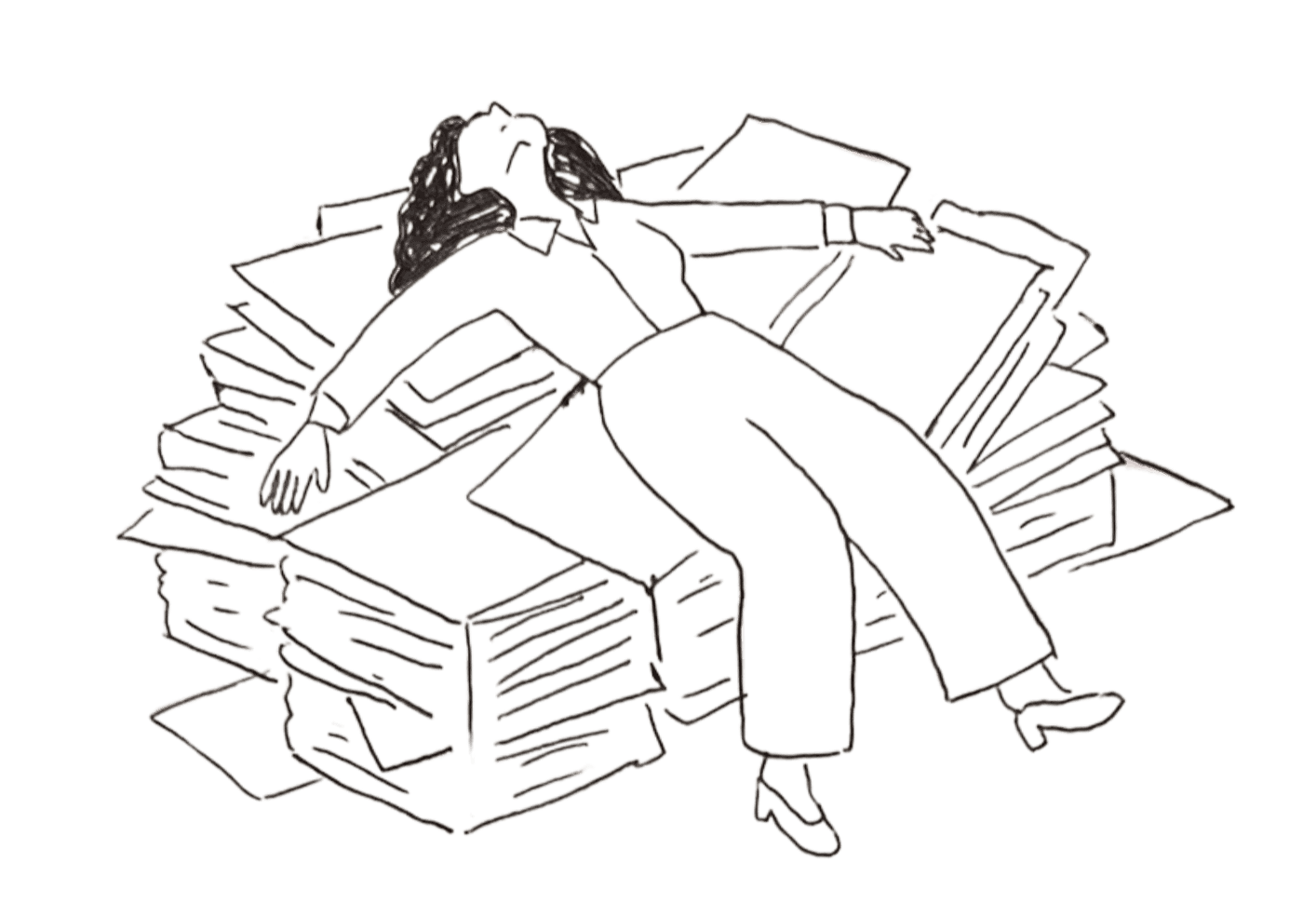
A glossy, generic poster tells a community that an event was an afterthought, that no one on the other end spent real time thinking about it. I’d rather see a badly drawn stick figure than a polished, machine-smooth image, because the stick figure proves someone showed up and tried. Integrity Initiative runs on sketches I draw myself, deliberately rough, because the roughness carries information the polish can’t. It says a person was here, even on the days I’m juggling a dozen other jobs, because it doesn’t have to be time-consuming.

Imperfection is, to me, close to the actual substance of being a person, the thing that thins out whenever a task gets handed to a process that can’t get anything wrong in the ways that matter.
My fear is a world that makes the generic feel safe and the messy feel risky. A flat, careful, inoffensive version of a thing gets rewarded whilst the odd, sincere, hand-made version gets treated as a liability, something to smooth over before it goes out into the world. Somewhere along the way, we started calling the wrong thing weird.
If I try to picture the smooth, fast answer as a person, this is who comes to mind: the kid I used to be in school. The one who always had the answer, who teachers fell back on to cover content they’d forgotten to prepare, who was always carrying flashcards around. A student who was, often without knowing it, self-centred in the pursuit of acceptance, respect, and perceived success, and who didn’t have much personality beyond the chapter of the textbook currently being studied. A student who hadn’t done anything wrong, but nobody really liked… in fact, the lack of ‘doing things wrong’ was kind of the whole problem.
I write this without judgment for that version of me.
What I feel is grief, and anger at a culture that made it easier to sound sure than to sit with not knowing.
As I continue to move away from ‘youth’ and into adulthood, I realise the kid who collects stamps, who can name every kind of dinosaur, who loves frogs for no reason at all, is not the kind of weird we grow up thinking it is. The actual strangeness is a system trained to prefer the loud, confident, empty answer over the specific, effortful, slightly embarrassing one, and then to call the specific kid weird for having it.

Stay weird.
Join the Ingetrity Army
Be apart of our growing team

