
Blog
Oops... we yapped too much!
9 mins
Reading Time
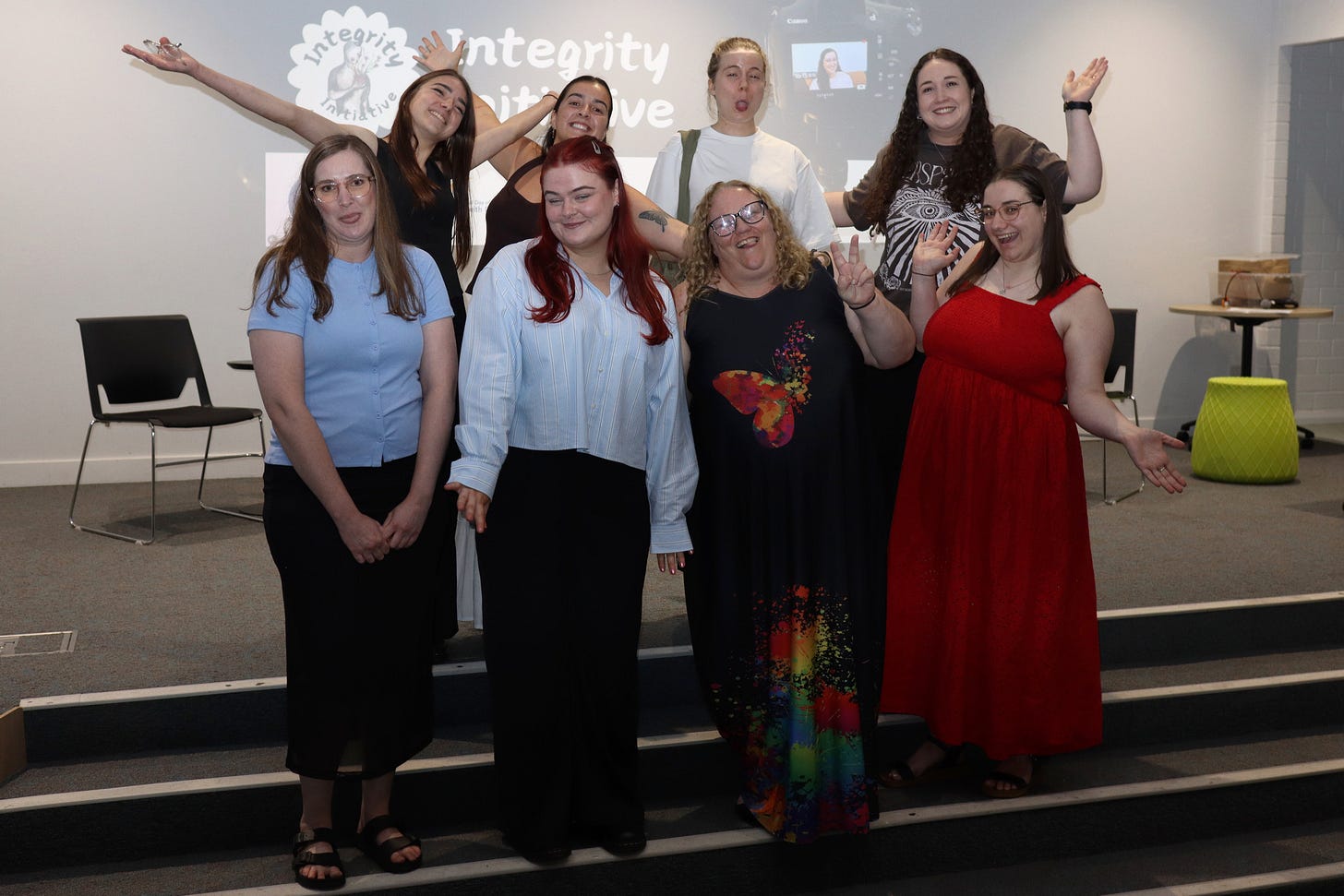
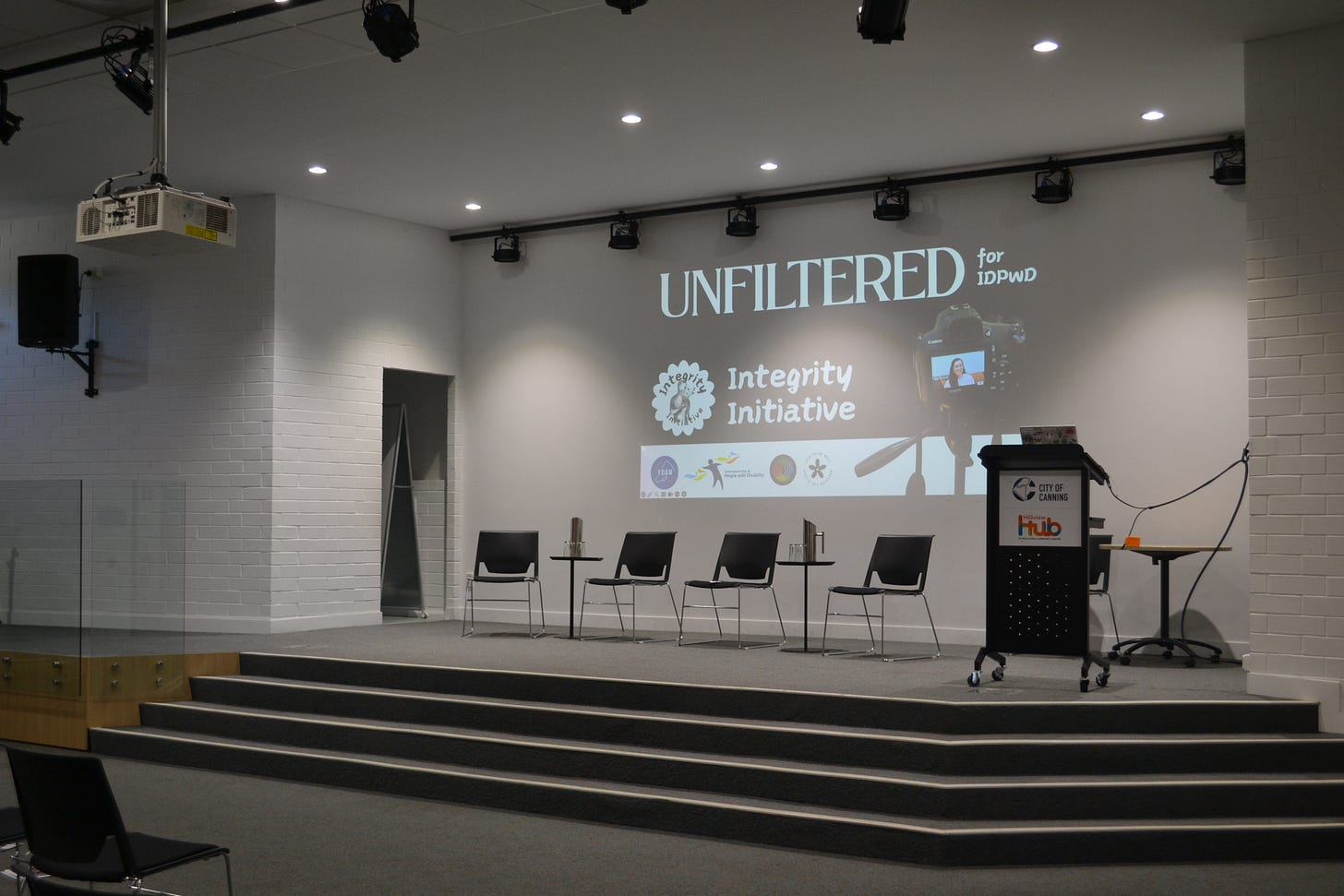
On Saturday the 13th of December, we held a community screening of Unfiltered in celebration of International Day of People with Disability.
We had a screening of Unfiltered, an address from myself, the Hon. Hannah Beazley MLA, Isabella Choate and Lily Gaulton. We also had a panel discussion with some of the crew from the film with some of the crew from the film itself - Zoe Diakoloukas, Eva Cocks, Annabel Tannenbaum and Ally McDonald
It was an absolutely mind-blowing reminder of community and the power of Lived Experience.
You can find plenty more information about it here!
Here is the condensed version of these answers if you don’t have time for a full article!
In true advocate fashion, the passion and energy was overflowing, as were the audience’s questions… so we decided to write you an article using the questions we had left over. Without further ado, here are our answers.
Q: What is your message for people who may be struggling with mental health or disability?
RACH:
your pain, your shame, your fear, your ambivalence… it is all REAL and I see you. That said, it does not the only thing about you, it is a part of the complex and convoluted web that makes up you, and that web is allowed to be messy and confusing. You are not a problem, and you do not need to be fixed, you need to be me with kindness and compassion… JUST like everyone else.
ALLY:
you are not alone and there are communities that understand you, will support you through your struggles, when you are doing well. They will not give up on you.
ZOE:
I hear you. I see you. I am here for you. You are not less or imperfect or broken for your challenges. The emotions you feel are vaild and should be heard. Remeber there are people, places and communities waiting to embrace you, support you, and celebrate you exactly as you are.
ANNABEL:
If you’re struggling with your mental health or living with disability, there is nothing wrong with you for finding this hard. Even with insight, strategies, and support, burnout and distress still happen. Not because you’ve failed, but because the world often isn’t built with you in mind. Your capacity is shaped by systems that prioritise productivity over wellbeing, not by a lack of effort or strength. Needing rest or adjustments isn’t weakness, and struggling doesn’t mean you’ve gone backwards. You don’t owe resilience or inspiration. You deserve understanding, dignity, and the right to exist as you are, even on the days when simply getting through is enough.
EVA:
It might not be okay now but that doesn’t mean it won’t be eventually. Keep showing up, keep going. Things might be different to how they were or different to others but your difference is valuable and it can lead you through.
How would you like the advocacy space to look in 2026 and beyond?
RACH :
More real, and less protective over that reality. Advocacy comes with more downs than ups, and the danger is not in these lows but in the personalisation of them into inherent failure, which comes when we don’t talk about them and thus are unable to see that they are NOT indicative of personal downfall.
ALLY:
More lived or living experience peer advocates in the workforce. We have so much to contribute. There are too many barriers labeled as requirements to join these workforces. To understand that not everyone can get a uni degree or drivers licence.
ZOE:
More open, honest, raw and transparent conversations. Advocacy through the good but also transparent around the reality of life and the realness of highs and lows. More lived experience voices in higher places and consumers at the forfront of systemic decisions and change.
ANNABEL:
I want the advocacy space in 2026 and beyond to move away from performative inclusion and toward real, accountable change. A space where lived experience isn’t mined for stories but respected as expertise, where disabled and neurodivergent people are paid, supported, and listened to. Especially when what we say is uncomfortable. I want advocacy that challenges productivity culture, tokenism, and “resilience” narratives, and instead centres access, rest, autonomy, and collective care. A space that makes room for complexity, burnout, and difference, and recognises that sustainable change comes not from inspirational individuals, but from systems that are willing to change.
EVA:
Accessible for more people to contribute their diverse lived experience too. I want lived experience to be seen as expertise as compensated as such. I want lived experience to be taken seriously across all sectors so when people have these experiences they see value in what they have lived through in terms of helping others.
Who or what inspires you to keep fighting the good fight every day?
RACH:
I know we spoke to this on the panel, but I wanted to share this: the past version of me who shouldn’t have been through what she endured
ALLY:
My family and my best friend, they are always there when I come up with great ideas to support people but then I find myself talking myself out of it, they ask questions and make suggestions. My cheering squad! Also, my experiences and my experiences as a carer watching the traumatisation, discrimination and exclusion of hospitals and services towards my daughter R.I.P. Shania Lee Thompson 🤍🕊️ She is definitely my inspiration to keep going.
ZOE:
My younger self. The version of me who experienced dehumanisation, discrimination and traumatic treatment. The one who thought this treatment was a direct product of my inheritely bad self, deserved and normalised. The one who didnt know her rights and her voice. To keep fighting with the hope that even one person never experiences the same treatment i did, feeling the same way, questioning their value in the world.
ANNABEL:
I’m inspired by disabled and neurodivergent people who keep showing up honestly. Not as heroes or success stories, but as whole humans. The ones who name harm, set boundaries, rest when they need to, and still imagine something better. I’m inspired by young people learning self-advocacy earlier than I did, by late-diagnosed adults reclaiming their stories, and by moments when someone feels seen or understood for the first time. Ultimately, I keep going because I know how damaging silence can be and how powerful it is when someone finally hears, “it’s not you.”
EVA:
I said this on the panel but stories!! I feel like narrative and representation underpin lived experience communication as well as communication in wider health areas. I have always loved interacting with the stories of others living through their own experiences. I struggled to find positive, comprehensive representation of psychosis and this personally inspires me to keep going and sharing my story in order to reach others. My lived experience is a story I am familiar with but if it can go beyond to uplift or reaffirm others I would be so humbled. That keeps me going: being the person I needed earlier in my journey.
If you had a message for those in power who do not take this seriously, what would it be?
RACH:
GOOD LUCK (hahah), but not in reality, I would approach it with curiosity. Why are they closed off? What has led them to think in that way? How can I gently challenge the beliefs underpinning that?
ALLY:
To be honest I have met with powerful people and it always ends the same, they take an interest, ask questions but once the door closes behind them they forget about it so due to that, I will believe it when I see them take ACTION!!
ZOE:
I appreciate your curiosity, ‘interest’ and words. But we want to see action!! Tangible action, benefiting real people. And for those that dont show curiosity or interest, WATCH THIS SPACE! We have not given up yet, and we are not giving up now!
ANNABEL:
Ignoring lived experience isn’t just negligent. It actively harms the people you claim to serve. Policies, programs, and decisions built without the voices of those they affect are incomplete, unjust, and unsustainable. It’s time to stop paying lip service and start listening, adjusting, and being accountable. The work isn’t optional. People’s lives depend on it.
EVA:
Everybody has to consider their mental health and wellbeing. If someone is not struggling with mental ill-health, then chances are they know someone directly impacted. How can this not be a serious issue? We all need to look after the diversity of our minds together. Mental health impacts everyone.
Will there be an Unfiltered part two?
RACH:
I hope so, I definitely WANT to. We will see what comes xx
ALLY:
I sure hope so, it is a brilliant project!
ZOE:
I really hope so! Rach and lily are incredible and i know with the right opportunities and funding they will definitely try!!
ANNABEL:
I hope so! There’s a huge need for it. The difficulty is that funding is a huge barrier. There’s only so much you can do with no money. Funding needs to prioritize and value lived experience and lived experience expertise.
EVA:
Yes (I am manifesting). It would be great to show the diversity of lived experience we chatted about on the panel. Rachael and Lily are the women for the job!! This project has been a true joy.
Apart from lived experience, what inspired you to get into mental health advocacy?
RACHAEL:
Really, just my own experiences, I wouldn’t have had any reason to go into that field had I not seen the utter degradation, dehumanisation and major gaps that exist when talking about mental health. I actually wanted to be a doctor or a paramedic, and I was planning on going into biomedicine… and now I am working to pose alternatives (or rather, adjunctions) to the biomedical model
ALLY:
I am not there yet, officially but it is my passion to be a voice and give strength to those who want to speak up.
ZOE:
I believed my horrifying experiences in the system, surely only happened to me. But through my peer work, and watching so many others also have horrible, dehumanising experiences, also filled with a lack of support, representation and voice, i couldnt sit back and see this continuing to happen, and thus far my advocacy journey began!
ANNABEL:
Apart from lived experience, what inspired me to get into mental health advocacy was seeing the gap between what people actually need and what systems provide. I was frustrated by services that claim to support but often fail to understand the person behind the label, and I wanted to help change that. I’m motivated by the idea that mental health and disability support can be practical, dignified, and empowering. Not tokenistic or one-size-fits-all, and by a desire to make spaces safer and more accessible for everyone, especially those whose voices are too often ignored.
EVA:
Aside from my lived experience of ill-health and interesting time in the mental health care system, I would say the lack of meaningful representation for people with my diagnosis of schizoaffective disorder inspired me to do something. I wanted to get into mental health advocacy by telling real and different stories to what we see in films or read in the news.
What does being an advocate mean to you, and what is one thing in your advocacy journey that you are proud of?
RACH:
Etymology - The word ‘advocate’ comes from Latin, combining ad- (to, toward) and vocare (to call), meaning “to call to one’s aid,” originating as a legal term for someone summoned to help or plead a case.
To me, being an advocate means pushing for and calling accountability towards the views, values, beliefs and iterative wisdom of the most marginalised corners of society. It is not about being the loudest voice or even the best spoken, but being true and accountable and authentic… and holding space for others to co-exist
ALLY:
I have been an advocate for my daughter because she did not have the capacity to speak up and do not understand the language spoken while at meetings. As I mentioned before it is walking alongside someone and lending your voice and teaching them the skills to advocate for themselves.
ZOE:
To be able to speak up for those who may not feel able, to represent those who feel alone, broken or ‘wrong’. To hold space for those still navigating their journies, also advocating, and those before us. To speak my own truth in the hope to create safer, more inclusive and supportive spaces for people who dont feel represented. Not to be louder, bigger, better or tokenised, but to walk along side eachother and fight for our human rights.
ANNABEL:
Being an advocate means using my voice, knowledge, and experience to push for real change. Not just to raise awareness, but to challenge systems, policies, and attitudes that fail disabled and neurodivergent people. It’s about creating space for others to be heard, supporting autonomy, and ensuring people can access the adjustments, understanding, and respect they deserve. Advocacy isn’t performative; it’s persistent, practical, and grounded in the lived realities of the people I represent.
One thing I value in my advocacy journey is the times I’ve helped shift conversations. Whether in meetings, workshops, or policy discussions so that the voices of disabled and neurodivergent people are truly heard and acted on. Even small changes, like influencing how a program is designed or how language is used, feel significant because they create ripple effects that make systems more inclusive and respectful.
EVA:
Being an advocate means telling your story to help others and connecting within communities of shared experience and understanding. I have never really thought of myself as an advocate, that noun sounds so complete and proper. I quite like it though. One thing I am proud of in my advocacy journey is I have met two people who have shared with me that they have also had a psychosis. It was my original goal to keep sharing my story until I met someone else with similar experiences. And now it has happened twice (!!). I hope it continues to happen on my journey as an advocate.
Zoe Diakoloukas - zoediakoloukasand hold.and.heal
Eva Cocks- eva.cocks0210@gmail.com
Annabel Tannenbaum- - thrivingmindseducation
Allison McDonald - allymcdonald82
Join the Ingetrity Army
Be apart of our growing team

