
Blog
Nothing About Us Without Responsibility From Us
3 mins
Reading Time
DISCLAIMER - This was supposed to be a post, but in typical me fashion I have too much to say... so here is a full version.
After many (arguably too many) meetings this week, I’m left thinking deeply about what it means to work in advocacy, not just as an individual, but as part of a collective.
Through work/ chats with Rafi Armanto, Finding North‘s Perspectives, Imagined Futures‘s children and young people community of practice, the Healing Kids Healing Families team at The Kids Research Institute Australia, Youth Affairs Council of Western Australia (YACWA) YEP Project, Orygen, South Metropolitan Health Service (a busy week indeed), one reflection has repeatedly been reinforced:
Lived Experience should be taken seriously.
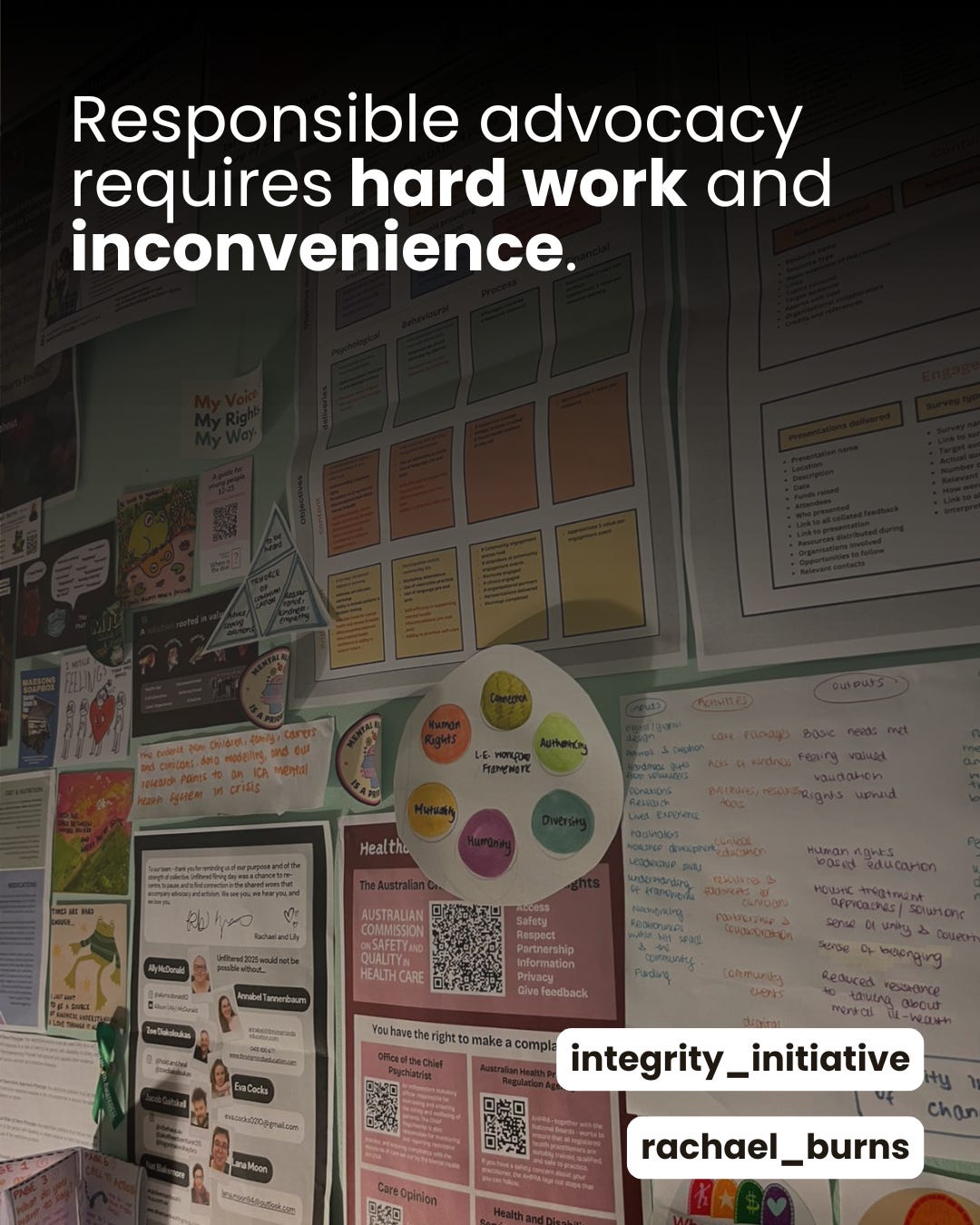
Recently, I’ve been selected as the consumer representative overseeing the NSQHS Standard 2 (Partnering with Consumers) at ICAMHS (Child and Adolescent Health Service). Being the nerd I am, I have loved using this as an excuse to deep-dive into the fantastic work of the Australian Commission on Safety and Quality in Health Care: the standards, the Charter, the work that the Commission does more broadly... not because someone told me to, and not (just) because I enjoy it (which I do), but because I have a responsibility to, and because I respect lived experience as a discipline.
Which brings me to the question I have been asking lately: how can we expect others to take lived experience seriously if it is not taken seriously from within? If we do not see it as equally important work, even the parts that are hard, mundane, or boring (to some)?
These are truths that I know:
Everyone has lived experience.
Everyone’s lived experience is valid and meaningful.
Everyone’s lived experience can be used, both consciously and unconsciously, for learning, growth, and improvement, even when it isn’t professional expertise.
Most people will not use their lived experience as a central part of their professional life, and that is okay.
When someone with lived experience is acting in a professional space without understanding the potential implications of those actions, they can cause significant harm.
Going into representative positions without understanding historical context, epistemic injustice, collective purpose, and reputational risks to lived experience workforces is actively harmful. It is not just about individual experiences, it is so much broader than that. When done without due care, it can regress social justice movements and discredit lived experience expertise as a profession and skill set.
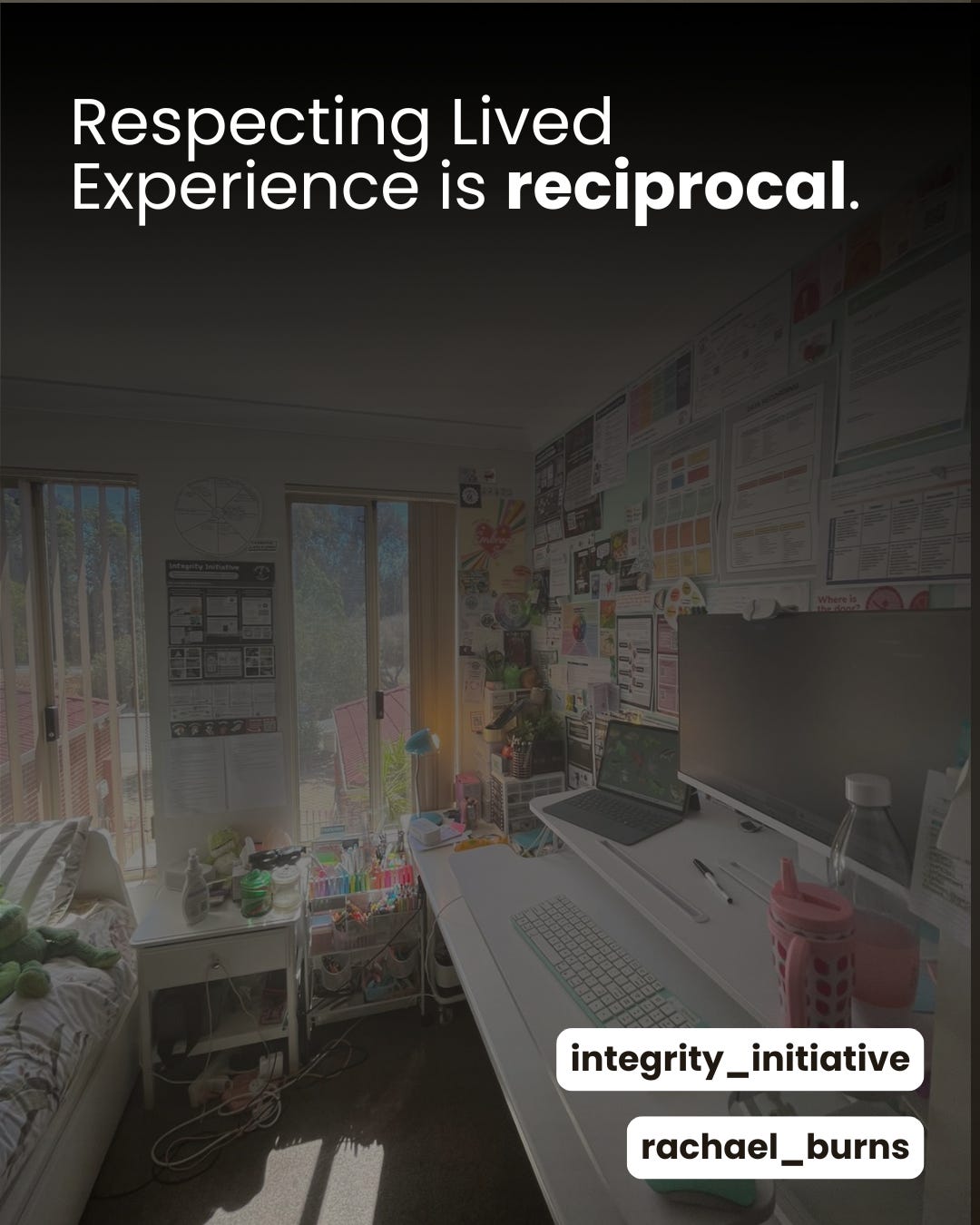
The truth is that working from Lived Experience is hard.
Opportunities are not found… they are created, built, fought for, and sought out.
As someone who has now acted in a fair number of lived experience arenas, it is clear to me when a person is chosen as a token or cherry-picked through privilege without having done this work and built themselves from the ground up. As frustrating as it is, I find some reprieve in knowing that they usually don’t get very far, and typically the damage is primarily to the reputation of whatever organisation is committing the heinous act of tokenism… but not always. And that, my friends, is where our issue lies.
We cannot expect others to take lived experience seriously if we who work within it don’t value it seriously ourselves. If we don’t spend hours researching, learning, and deep diving, how can we truly appreciate where we have come from and the direction we need to progress?
It is okay not to know. But in this work, it is not okay not to know and not actively try to bridge that knowledge gap. We can hold ourselves to account and acknowledge what we don’t know; however, we cannot afford ignorance.
We have a responsibility not just to our past selves and our experiences, but to those who came before us and to those who cannot advocate. This cannot be taken lightly.
The reality of advocacy is that it most certainly does come with consequences when we slip. Yes, consequences can be addressed and overcome, but if they are left unaddressed they can undo so much of what has been built.
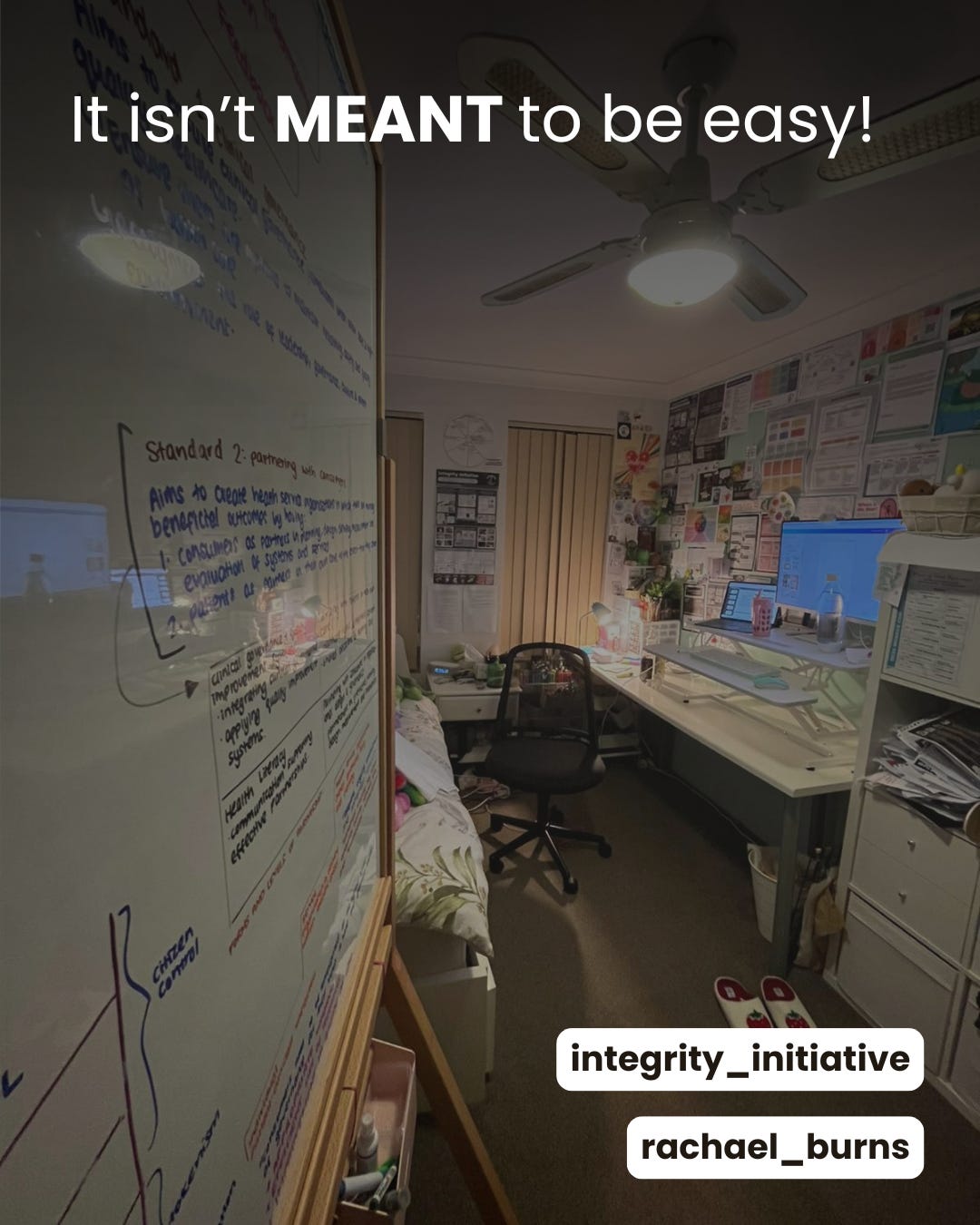
This burden is real, and it is heavy. This burden is seldom understood or given credit. Most of the time it is thankless, and all of the time it is exhausting. But more than a burden, this is a privilege to work for, to achieve, and to hold.
Join the Ingetrity Army
Be apart of our growing team

